Hello everyone!

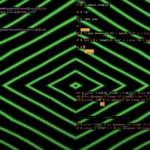
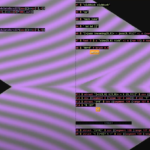
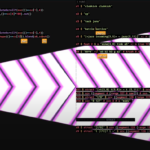
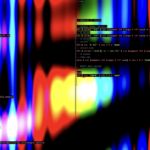
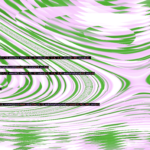
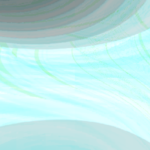
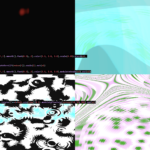
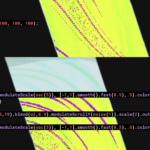
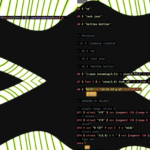
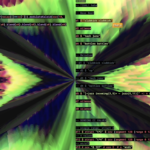
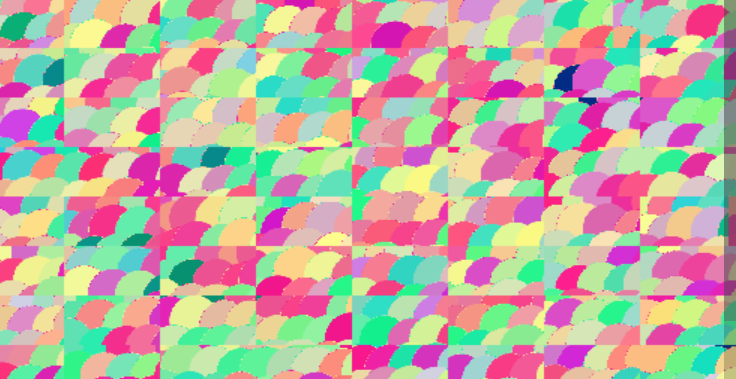
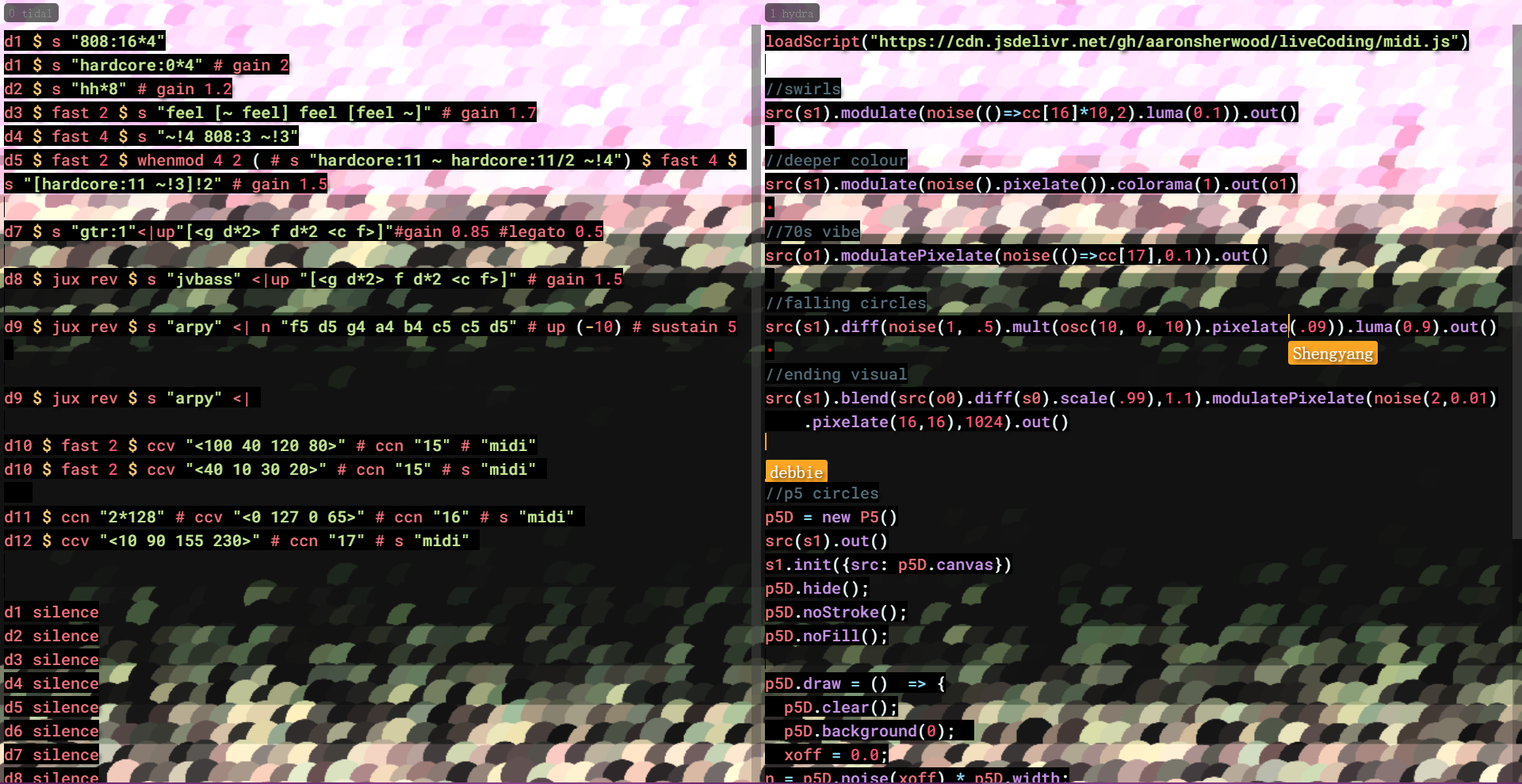
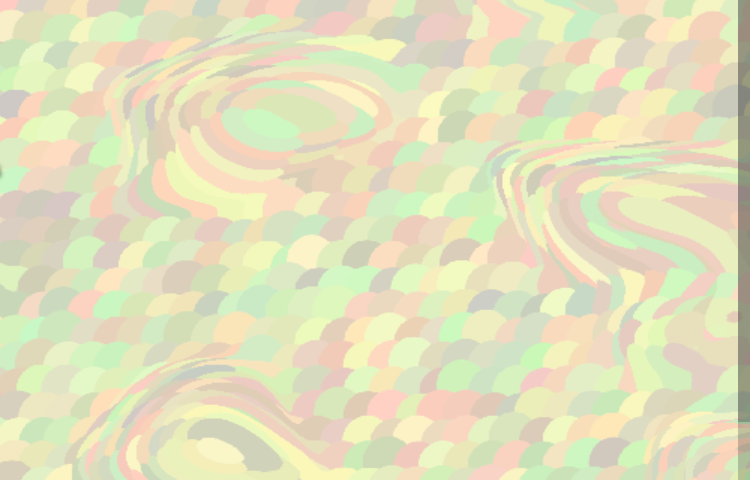
For personal reasons, I had to be out of campus and I just returned, so I couldn’t do the presentation live. I am attaching a video of my short performance here. I was trying to see how P5.js could be combined with things we already know from Hydra to create animations.

This is the performance

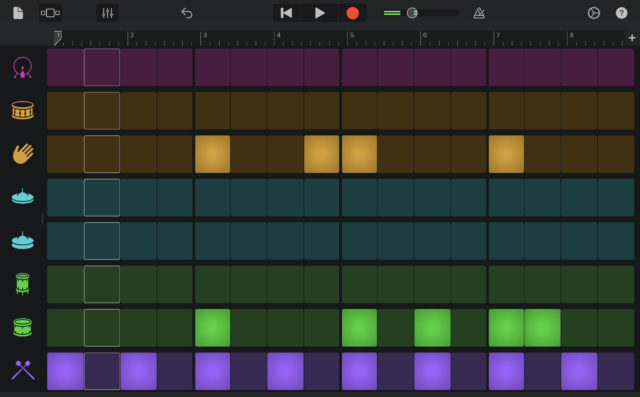
It was pretty fun to do. I think the music is pretty basic but it’s supposed to be just a base, the visuals are the actual show.

One problem that I was having with P5.js was that sometimes the previous sketch would stay in the channel. It was quite frustrating at the start but afterwards, I was able to use it as a way to create.

While reading this article, something that came to mind was how, in a way, sound already has some sort of visualization in nature like how noise lies on a color spectrum or how sine waves have a defined shape. While live coding, I usually try to visualize how the sounds that I generate sound and I find myself always going back to sound waves for inspiration or use them as a base to build off of. I found the works of Paul Klee particularly refreshing because he managed to capture how sound would feel in a still painting using simple shapes and colors.


One form of sound visualization that I hadn’t thought about as a form of art is music videos. Because of how normalized music videos have become, I never thought of them as a form of “art” that combines both sound and visuals. This kind of adds up to when the author says “the dual profession of artist-musician/musician-artist is no longer anything of note” and makes me question whether we must create something drastically different for the work to be “noteworthy”

This is a very interesting passage about two primary art forms: painting and music. In my past knowledge and practice, painting and music, two are parallel. And when we do live coding which combines graphics and music, there is a slight overlap between the two. Specifically, we just try to reflect the rhythms or beats on the graphics while the graphics may have similar themes to the music we make. This passage tells that painting, and by extension, our images can be another form of musical expression and vice versa.

This leads me to think about what kind of combination of graphics and music we are supposed to make. If we only want to make Algorave, it is a good way to use featured themes on both graphics and music, and let the graphics follow the beat or rhythms to change. Because one of the main purposes of Algorave is to make the audience dive into the beats and rhythms, using graphics to visualize the music and the beats of music are always good to use. But when we want to make something more artistic, with the combination, we probably need to change the starting point. Though it’s not the only way to do so, it must be one of the best ways, which is implied in the passage, is keeping the graphics and music parallel. Certainly, it’s not simply parallel. The parallel should be mirror-image relation, or say, the music and image should be doppelgangers of each other. The two can have their own different motives, and the two are interconnected in some ways to present together.

I think I learned a lot in this reading, I never knew about the Fluxus movement, and there were a lot of names that I had to google–in a good way, a way that made me feel less alone in the practice of new media arts.

It’s also interesting to me how many musicians came from Art School, and how art and music social bubbles have intermixed internationally. In fact, the reading even mentions that people didn’t always choose to wear multiple hats by choice, but rather because the market and economy dictated it. These economic constraints and the emergence of dadaism left a very noticeable effect on individuals who joined the Fluxus movement. A lot of the artists that were mentioned in the reading made anti-art intermedia pieces that were concise and short, sometimes humorous with less focus on the aesthetic than the message. 

I don’t think there’s much to agree or disagree with in this reading. It’s like a hyperlink framework of names relevant to what we do in class, which gives us history and therefore purpose.

It is interesting to note how previously non-existent forms of art are coming to be merged together in the 21st century. Mixing music, generating design patterns, creating noise, and then finally making sense of it. I think this is partly how interactive media has emerged as a discipline, or rather a combination of so many other disciplines.

From the reading, it seems that IM art is far from being considered “classic”:

The main focus of modernist art was therefore on the basic elements (color, forms, tones, etc.) and the basic conditions (manner and place of presentation) of artistic production (p.2)

Although the reading mentions artists like Paul Klee and Wassily Kandinsky who began experimenting with different representations of music, in the case of multidisciplinary art, do we consider the Fluxus movement and Happenings as the “foundation” of new media art?

What is fascinating about this new movement is the open-access philosophy behind it:

It was about creating a glorious adventure from non-existent talent and unprofessionalism. Most of my ideas and art products are simply the result of my attitude to life. And are intended to cause unrest. (p.4)

The process of making new media / multidisciplinary art accessible and easy to start with, just like with open source software these days, is probably what draws people from so many backgrounds to it:

Anyone can make noise, for that you don’t need digital recording equipment or a 36-track studio with thousands of sophisticated elements. (p.4)


Given all of the experimentation and improvisation, it is interesting to see where new media will be in just a few years from now, as already, it broadens the understanding of art and how we perceive it.

This reading was very interesting for me. I did not know there were trends observed in the 20th century that led to sort of a movement and emerging roles of artists as musicians and musicians as artists, which led to this whole phenomenon of what the author calls ‘artist-musicians/musician-artists’. I was unaware of how music inspired artists in their work and vice versa. It was very eye-opening. Music not only led artists to better incorporate the patterns in their artwork but also art led to the development of new musical instruments beyond the chromatic keyboard. The relationship between audio and visuals is much more than just combining them together, it is the relationship between music and art that complements each other and gets these two disciplines under one umbrella. I really enjoyed reading how this practice gave rise to a broad variety of cultural activities like sound art, pop music, film and video, etc. The whole idea of breaking boundaries and producing content that defies general categorization was inspiring. I myself try to make work that is multimedial and interdisciplinary, and after reading this article, I am just more charged up to do so!

I do question how as artists can we best incorporate these multidisciplinary aspects in our work. After going through this reading, I realized how closely these art forms are linked with each other, that it might be hard to clearly categorize which genre one is working with. So, is it possible that we are already dealing with different art forms and not realizing it? One might already be incorporating their music or dance or painting knowledge into dancing or painting or music that they compose, but might be unaware of how one form inspires and contributes to the other. How can we better enhance this relation and intersectionality in our works? Also, with this stems the question of how important is it to know if we are working with multiple art forms at a time to produce art that is interdisciplinary.

by Justin Hoffmann & Sandra Naumann


This is like an art history reading filled with artists and projects/works. I personally found myself knowing more about the art perspective than the music one while reading. 


As interactive media (arts) students, it’s essential yet complicated to think why we work in different disciplines of art and technology. Why do we learn coding as well as communications lab? Because you identify interests through explorations, and they are useful. Because you somehow have to integrate things under this major (okay off the point). But we have to recognize the fact that this realm has freedom established for expression, and the point of combining media and arts is for better expression and communication. 


I think the practical and economic perspective stands out. You learn something more than music or visual art and at the worst case, you can use the technical skills to do unrelated work. However, more disciplines have increasingly emphasized artistic/musical aesthetics. In other words, art or music itself has been involved interdisciplinarily, driving people to cater to it accordingly. 


Part of the possibility of integrating different arts is based on human’s sensory synaesthesia. I like the idea of using abstract musical terms such as “composition, symphony, improvisation, or rhythm” in painting. Because of the abstraction, they are almost self-explanatory when put into other contexts. And yes this further makes fine art disengaged from the means and disassociated from the object. This kind of pulling-away is further strengthened when thinking about interdisciplinarity. “The point was not to link different arts with one another but to find an appropriate means of expression for a particular idea, to test concepts in another field, or simply to extend one’s own radius of effect.” So art forms or materials are just media to convey concepts and ideas. That could also answer why integrative and experimental systems have been established in fine arts. 


The article frequently reminds me of the concept “Zeitgeist,” a German word basically meaning spirits of the time. Our analysis of art-history, musicology, cultural sociology, economic or psychological conditions all ultimately fall on Zeitgeist in art and music, such as the interest in universalism, synesthesia and the resulting trend toward interdisciplinary activity. Interdisciplinary trends and Zeitgeist always exist and change. Maybe in the future we simply don’t see musicians and visual artists as separated.